Tokyo Route 8
Strangers (Taichi Yamada Edition)Tokyo Route 8 is the busy road that defines the surroundings of the narrator’s apartment building: its traffic is so constant that its roar becomes part of domestic life, while the building’s near-empty nights make the contrast between urban motion and personal isolation unmistakable. The road also recurs as a practical route through the narrator’s present, set against his uneasy return to the Asakusa neighborhood bound to his childhood and his deceased parents.
Setting and Sensory Conditions
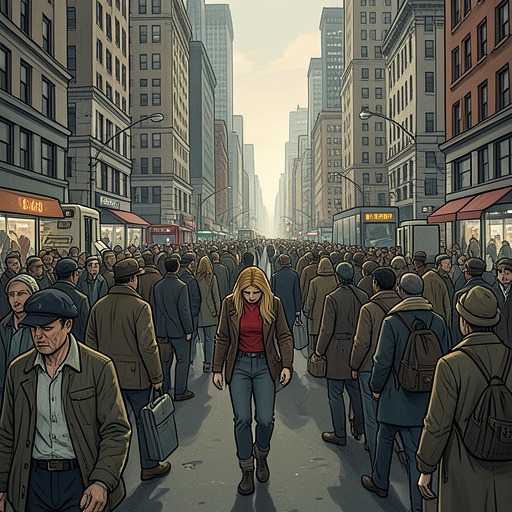
The seven-story apartment building faces directly onto Tokyo Route 8, where traffic continues at all hours. When the narrator first began living in the building full time, long-haul trucks used the quieter midnight roads to speed past one after another. Their rumbling seemed to rise from underground; lying awake, he felt short of breath as the noise and the confines of the room pressed in on him. A traffic light roughly a hundred meters away briefly interrupted the roar, but the trucks’ renewed acceleration made the silence that followed feel temporary rather than restful.
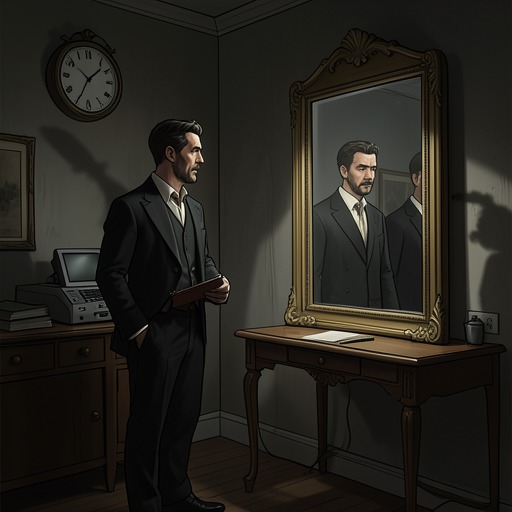
It took about ten days for him to adapt. The traffic and the air conditioner receded from conscious attention until, at times, the ticking second hand on the wall clock seemed to be the only sound he noticed. This adjustment came after he had once rejected the thought of sleeping in the apartment, then found himself unable to afford another home after his divorce. The road’s noise is therefore not just an environmental feature: it marks the conditions to which he accommodates himself when circumstance leaves him little choice.
The narrator still encounters that sensory pressure when he looks out from the apartment. He keeps the window closed, knowing that opening it would admit the road’s thick fumes and undiminished noise, as well as the day’s heat. At street level, traffic exhaust fills the air; even after darkness softens the heat, the sound and pollution remain. Tokyo Route 8 is close enough to be heard and smelled from home, but the closed window offers only a limited barrier against it.
The Road and the Empty Building
The traffic outside makes the building’s nighttime quiet especially uncanny. From his window, the narrator sees a broad parking lot whose spaces fill during the day but empty as darkness falls. One pink van, painted with three smiling squirrels and used by a children’s-apparel company, remains visible among the white parking lines. When he goes outside to investigate, he finds two additional sedans outside the view from his window, yet only his own seventh-floor window is lit. The road is busy; the apartments above it appear deserted.
This contrast prompts the narrator to question whether he is imagining the silence. The building is not isolated from city life: it faces a continuously active road, and daytime sounds eventually return as people arrive. In the morning, heels click along the concrete floors, doors latch, telephones ring, and office workers stir in the adjoining space. But after eleven at night, the illuminated window is his alone. Tokyo Route 8’s constant activity does not translate into company. Instead, the road’s noise frames a strangely vacant residential world.
That isolation becomes a point of contact between the narrator and Kei. She tells him that, around that time on most nights, the two of them are the only people left in the building. Her observation confirms what he has inferred from the dark windows, and his startled response registers the intimacy—and unease—of discovering that they share the same emptied space. The road outside supplies a steady public din; inside, the building’s few remaining occupants become sharply aware of one another.
Route, Memory, and Return
Tokyo Route 8 belongs to the narrator’s current city life, while his childhood geography lies elsewhere in the Asakusa district. He was born in Tokyo in 1939, and his family lived near Tawara-machi Station. After his father returned from the Philippines in 1946, the family went back to Asakusa; later, they rented a second-floor apartment in a tinsmith’s house behind Honganji Temple. These remembered places are not identified with Route 8, but their continuing pull gives the narrator’s movements through Tokyo a second, inward dimension.
On a visit to Asakusa, he passes through Kaminarimon Gate and strolls among the shops on the approach to Sensō-ji. He remains willing to visit the temple and the entertainment district but avoids streets more intimately tied to childhood: the area around Honganji Temple, Tawara-machi Station, and the International Theater. He fears that finding the old tinsmith’s building still standing would release grief he has kept contained since his parents died when he was twelve. His hesitation turns urban navigation into emotional navigation: familiar streets are both destinations and thresholds he is not yet ready to cross.
Later, he gets off the subway at Tawara-machi Station rather than continuing to Asakusa. The midsummer sun beats down on the shabby, discolored townscape as he heads to meet the couple who have become important to him. The return to his old district does not erase his doubts; the heat and worn surroundings register through that uncertainty. In this part of the story, travel through Tokyo connects ordinary routes to the narrator’s struggle over how close he can come to the past.
Everyday Movement and Urban Contrast
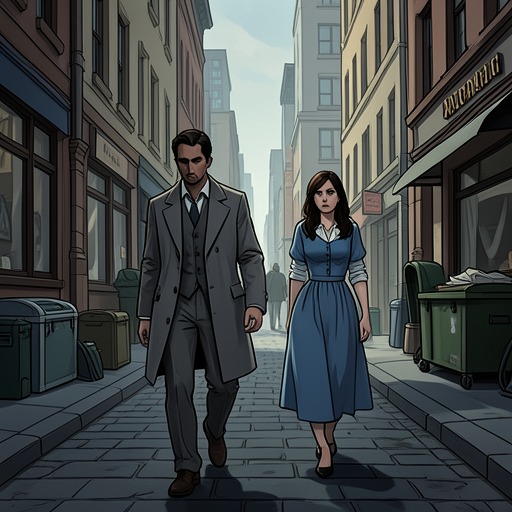
The road also serves as a practical measure of distance in the narrator’s present. When he and Kei go out for lunch shortly after three, they walk toward a small Spanish restaurant a full kilometer down Tokyo Route 8. The afternoon is intensely hot, and the air is thick with car and truck exhaust; the narrator has made a habit of restricting his breathing. He enjoys the outing, whereas Kei’s question about why he does not own a car expresses her dissatisfaction with the walk. The same road that presses noise and fumes into his home becomes the exposed route along which the two travel together.
Across these scenes, Tokyo Route 8 connects disparate conditions without resolving them. Its traffic is continuous, but the apartment building beside it empties at night; its fumes and heat burden the narrator, yet its length also measures a shared excursion with Kei. Against the road’s relentless present, the childhood streets of Asakusa remain charged with memory and apprehension. The contrast gives the urban setting its particular force: movement is everywhere, while emotional return remains difficult.